Pacman Nebula in Narrowband
-
Object
Pacman Nebula in Narrowband
-
Description
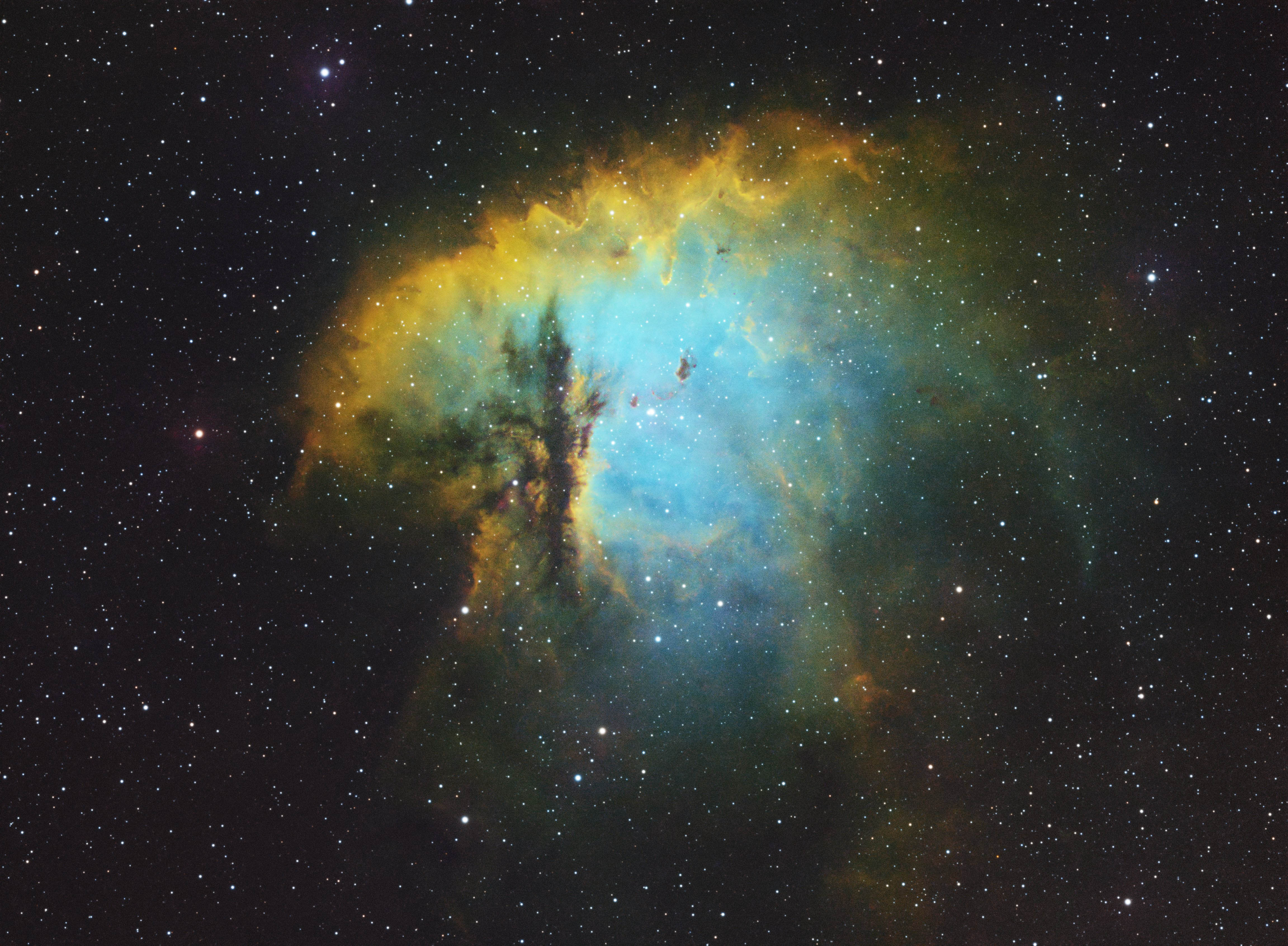
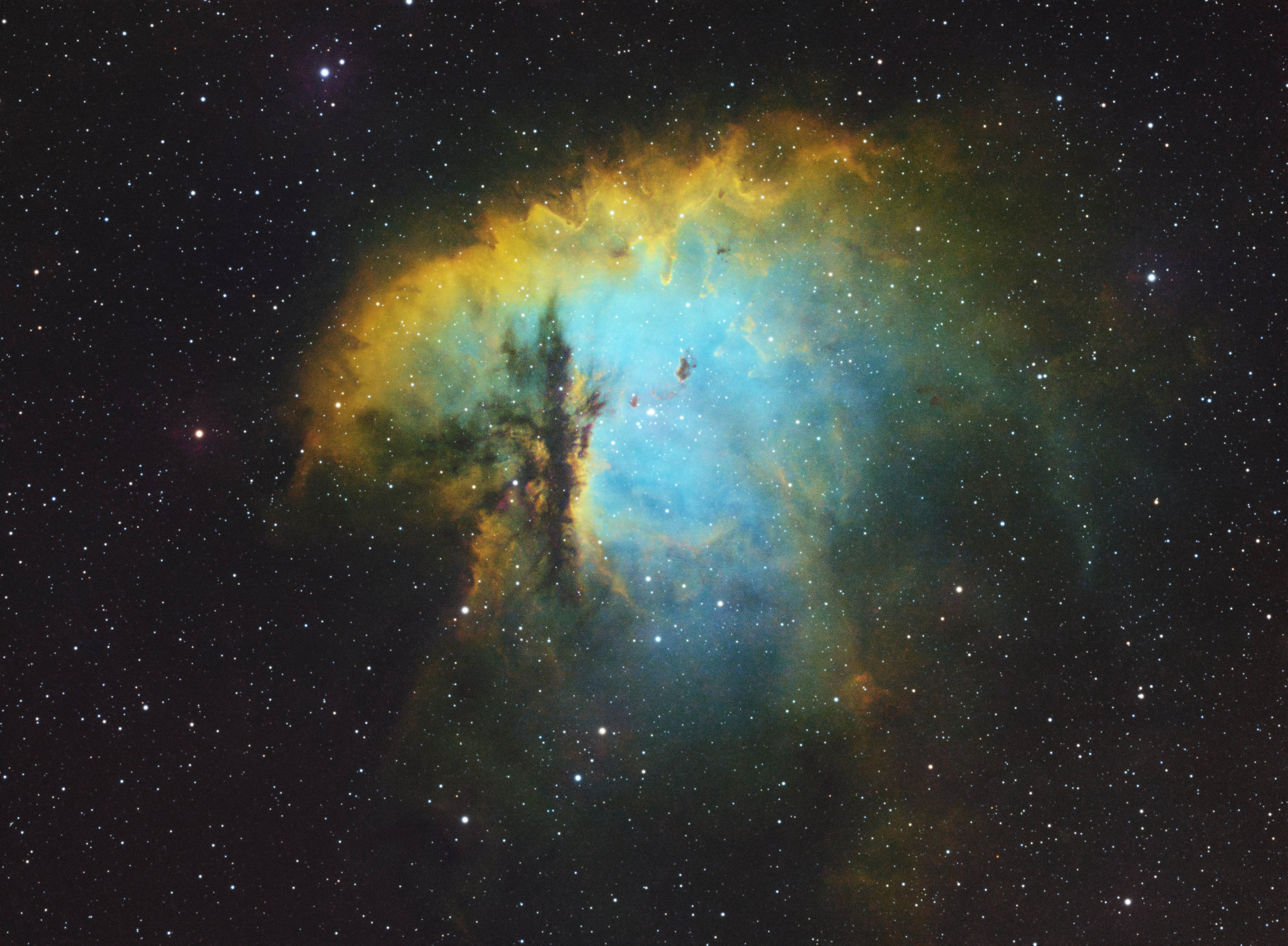
NGC 281, widely known as the Pacman Nebula, is a vast emission nebula and active star-forming region in the constellation Cassiopeia, located approximately 9,200 light-years from Earth. Its distinctive shape, reminiscent of the classic arcade character, is formed by dark clouds of dust silhouetted against brightly glowing hydrogen gas. Within the nebula lies the young star cluster IC 1590, whose massive, energetic stars illuminate the surrounding gas and sculpt the intricate pillars, ridges, and cavities visible throughout the region.
This image was captured using narrowband filters to isolate emissions from hydrogen, oxygen, and sulfur, revealing the nebula's complex structure in a modified Hubble palette (SHO). Hydrogen-alpha (Hα) contributes much of the bright golden-yellow emission, while sulfur (S II) adds warmer tones along the outer structures. Doubly ionized oxygen (O III) provides the striking cyan-blue regions near the center. Dark dust pillars cut dramatically through the glowing clouds, revealing the ongoing interaction between young stars and the material from which they formed.
-
Image
-
Scope
Explore Scientific 127ed APO refractor
-
Camera
ASI-1600mm pro (monochrome)
-
Mount
Paramount MYT
-
Filters
Ha Oiii Sii
-
Guiding
Askar 400 with off axis guider
-
Exposure Info
Total integration: 5 hours 35 minutes
Ha: 41 × 5 minutes — 3 hours 25 minutes
O III: 7 × 5 minutes — 35 minutes
S II: 19 × 5 minutes — 1 hour 35 minutes -
Date
11/14/2026
-
Copyright
Photo copyright Thomas Kerns, Beluga Lake Observatory